Product pages that sell
Pages designed in our UX/UI practice around the product’s story, with one clear call to action.
When a store is built from a theme instead of from the shopper, product pages bury the button, checkout asks too much and the relationship ends at the receipt. An ecommerce operation done right knows your products well enough to tell their story, puts a clear call to action on every page, and keeps the order, the stock and the customer in step behind the scenes.
Product pages read like spec sheets and bury the button.
Every page tells the product’s story and asks for one clear next step.
Shoppers leave full carts and nobody follows up.
Abandoned-cart journeys bring them back with the right reminder at the right time.
Stock counts differ between the store, the warehouse and the spreadsheet.
One catalog and inventory record keeps every channel in sync.
Customers email to ask where their order is.
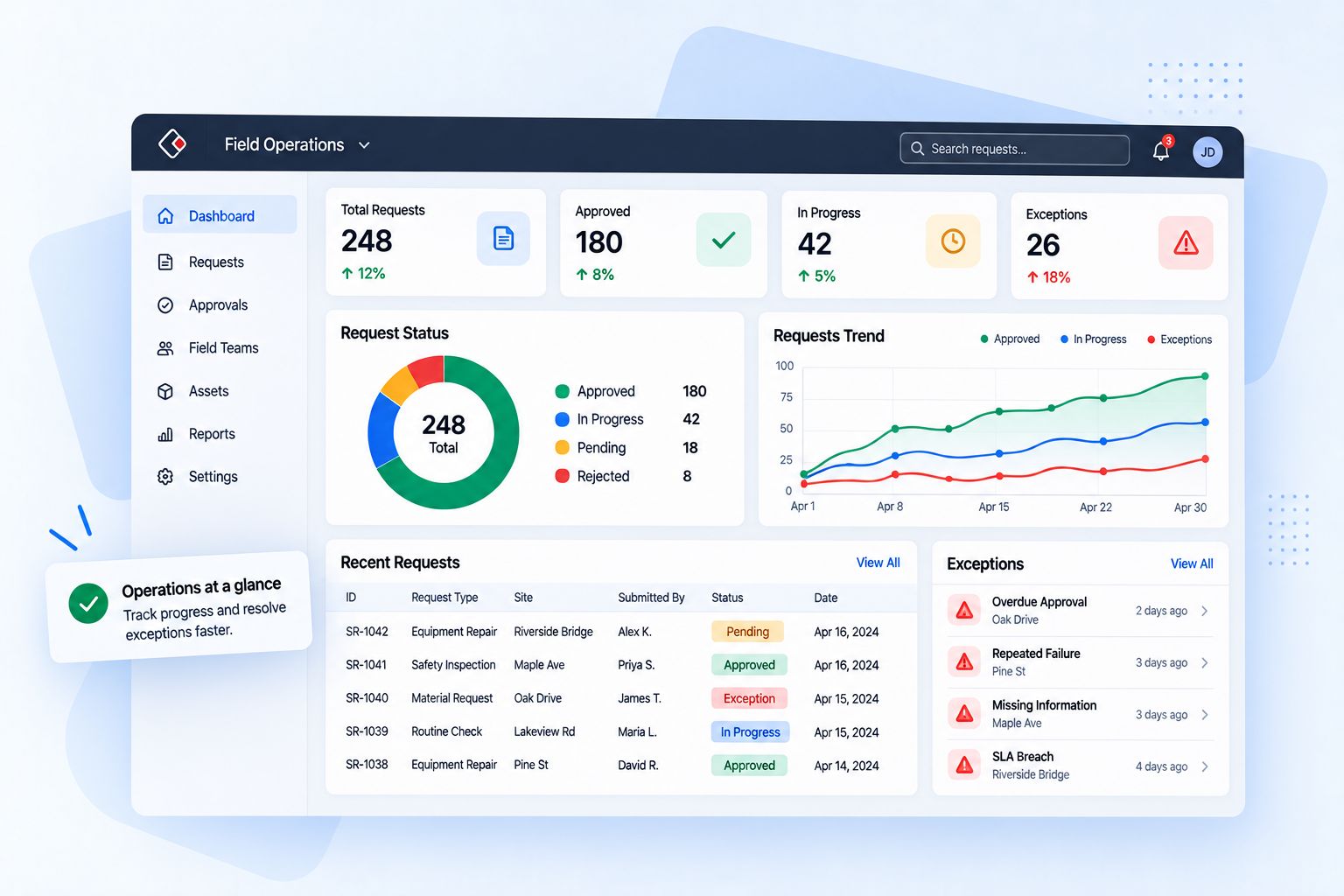
Order status, tracking and returns are visible to the customer and the agent.
Design changes are made on opinion.
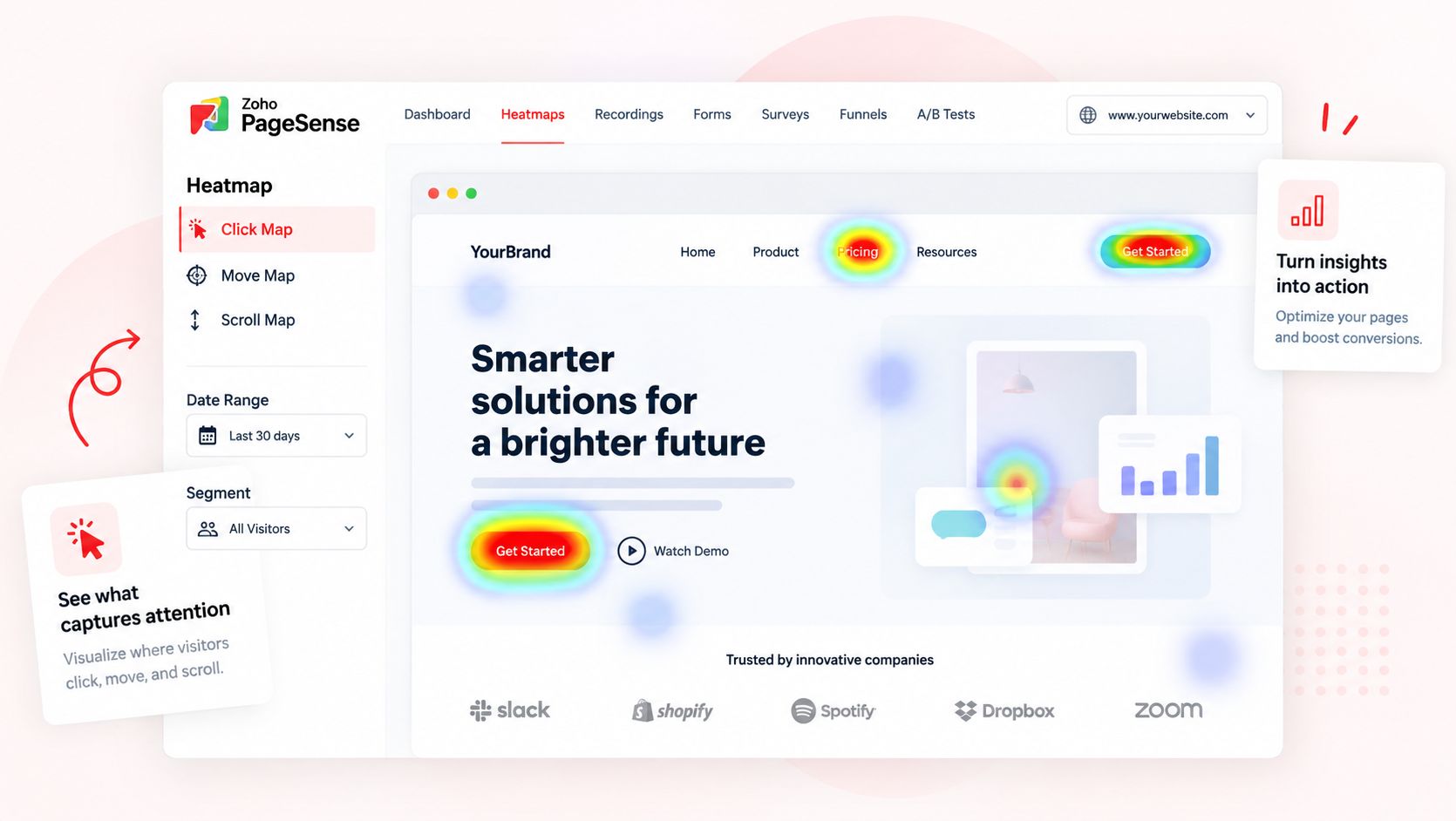
Heatmaps, funnels and A/B tests show what actually converts.
The relationship ends at the receipt.
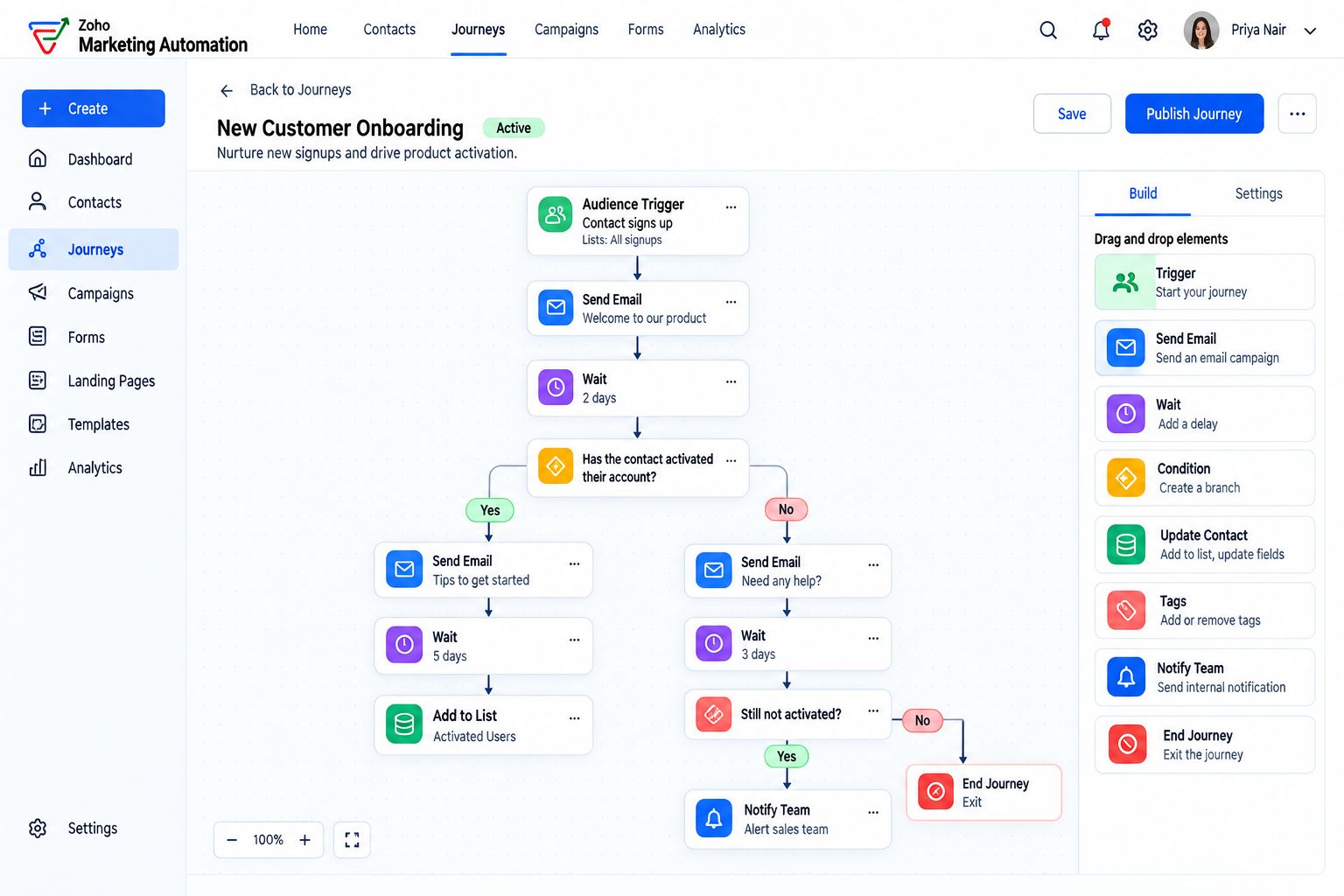
Post-purchase journeys ask for the review, suggest the next product and invite the reorder.
Pages designed in our UX/UI practice around the product’s story, with one clear call to action.
Collections, bundles, cross-sells and promotions that put the right product in front of each shopper.
A short, trusted checkout with the payment, shipping and pickup options your customers expect.
Heatmaps, funnels, session replays and A/B tests that show where shoppers hesitate and what fixes it.
One product catalog and stock record feeding the store, marketplaces and the warehouse.
Orders routed, picked, shipped and tracked, with payments and refunds synced to accounting.
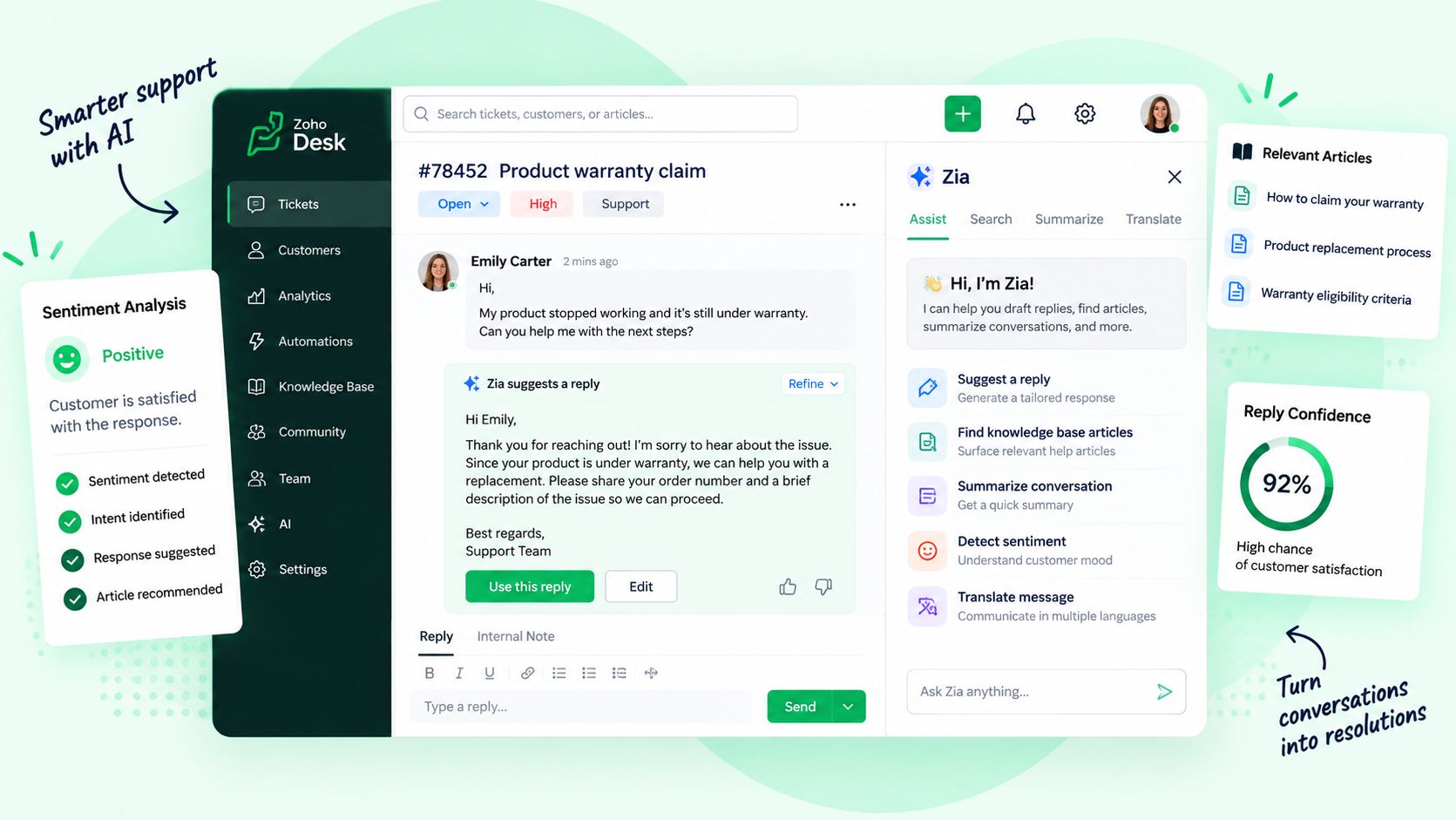
Order questions, returns and exchanges handled fast, with the full order beside every request.
Abandoned-cart reminders, order updates, review requests and reorder prompts that bring shoppers back.
The same ecommerce system serves each team differently. Choose a team to see what it gets.
The store, the catalog and the back office follow each shopper through every stage, and each stage hands the next one everything it needs.
Shoppers arrive from search, social, email and ads to a page built for them.
Collections and product pages show the right product with one clear next step.
A short, trusted checkout with the payment options your customers expect.
The order is picked, shipped and tracked, with stock updated everywhere.
Order questions, returns and exchanges are handled with the full order in view.
Post-purchase journeys invite the review, the next product and the reorder.
Most stores underperform because they were built from a theme, not from the customer. We start with your products and the people who buy them, design every key page through our UX/UI practice, connect the store to the rest of the business, and keep testing after launch.
to the first improvements live
built around a clear call to action
conversion and test reviews
We learn your products, your customers and your channels, and find where shoppers drop off today.
Product pages, collections, navigation and checkout designed in our UX/UI practice and reviewed with your team.
The store built or rebuilt on the platform that fits, with catalog, pricing and content moved with care.
Inventory, orders, payments, accounting, the help desk and marketing integrated with the store.
Your team learns to merchandise products, run promotions and handle orders, with playbooks and SOPs.
Monthly reviews of funnels, tests and journeys, and the next round of changes.
We work on the most relevant ecommerce platforms, including Shopify, WooCommerce, BigCommerce and Magento (Adobe Commerce), and build on Zoho Commerce when a store should run fully inside Zoho. Whatever runs the storefront, we connect it to Zoho Inventory, Zoho Books, Zoho Desk, Zoho CRM and Zoho Marketing Automation, so orders, stock, service and marketing work from the same data.







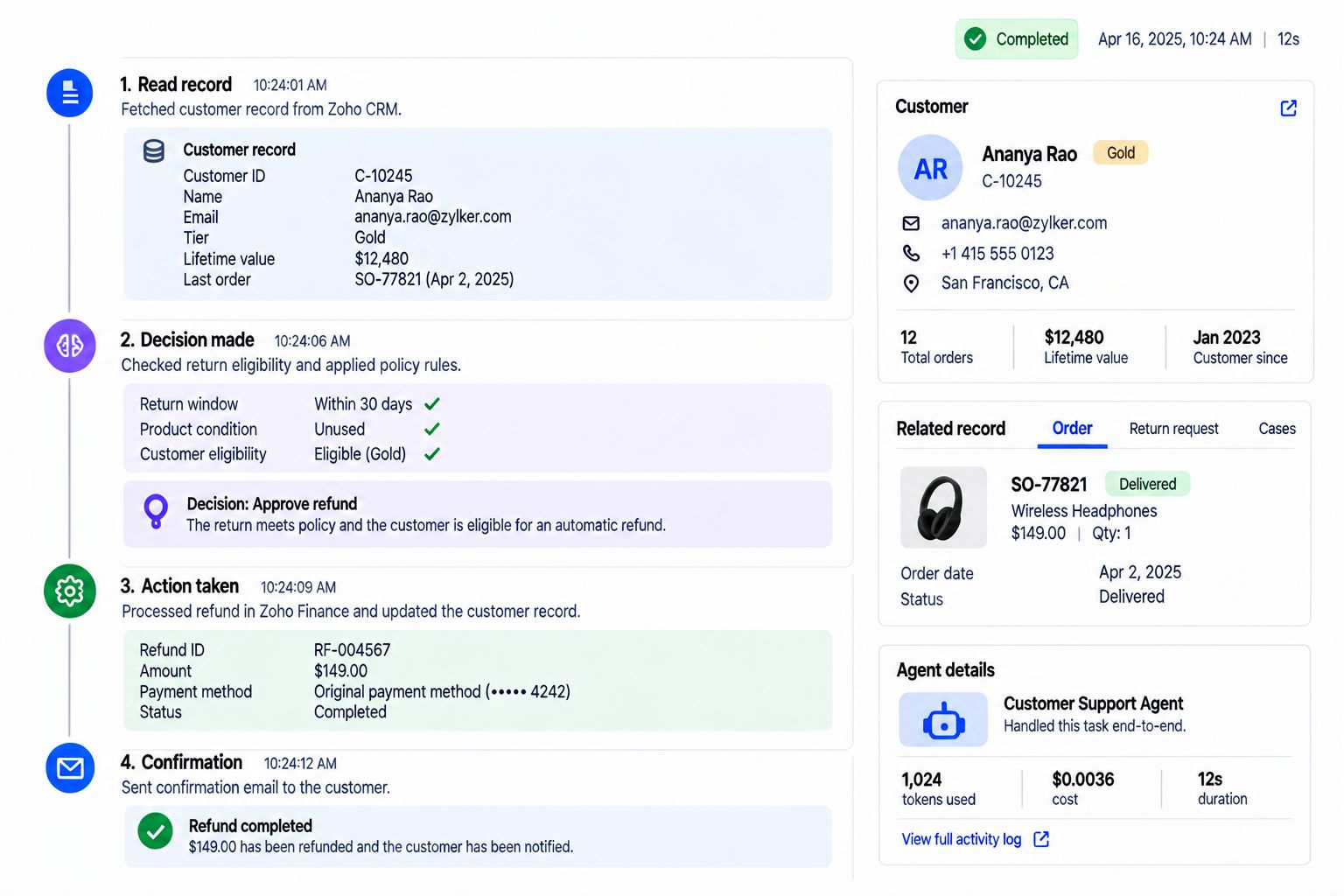
Zia and our AI agents work inside your store operations every day. They draft product copy, watch the funnel, sort order questions and check returns against your policy, so your team spends its time on the products and the customers. Every page change, refund and message is reviewed by a person, and every AI action is logged.
Drafts product descriptions and search copy from your catalog.
Edits for your brand voice and approves before publishing.
Watches the funnel and flags where shoppers drop off.
Decides what to redesign and what to test.
Answers where-is-my-order questions in chat.
Takes over the moment a customer needs a person.
Checks return requests against your return policy.
Approves the refund and handles the exceptions.
Forecasts demand and suggests reorder quantities.
Places the purchase order.

Your store, inventory and help desk, plus CRM, marketing, finance, HR and analytics on one connected suite with one login and one set of data. We plan, implement and support it for you.
It depends on your catalog, channels and team. We work on Shopify, WooCommerce, BigCommerce and Magento (Adobe Commerce), and on Zoho Commerce when a store should run fully inside Zoho. Our Technology Assessment recommends the one that fits.
Yes. Many projects start with an existing store. We review the funnel, heatmaps and checkout, fix what slows shoppers down, and test the changes before rolling them out.
Every key page starts with your products and the people who buy them. Our UX/UI team designs product pages, collections, navigation and checkout around one clear next step, then we measure real shopper behavior and refine.
Yes. We connect orders, stock, payments and refunds to Zoho Inventory, Zoho Books and Zoho Desk, or to the systems you already run, so the numbers match everywhere.
Yes. We build abandoned-cart, browse-abandonment, welcome, review request and reorder journeys, with segments based on what each shopper browsed and bought.
AI drafts product copy, watches the funnel, answers order-status questions, checks returns against your policy and forecasts demand. People review and approve what matters, and every AI action is logged.
Improvements to an existing store can go live in a few weeks. A new store, a platform migration or full integration with inventory and accounting takes longer, and you get a timeline after the review.
Show us your store and where shoppers leave. We will show you what a connected, conversion-focused experience would change.

Corporate Communications. Emotional Storytelling. AI. Operating Systems.