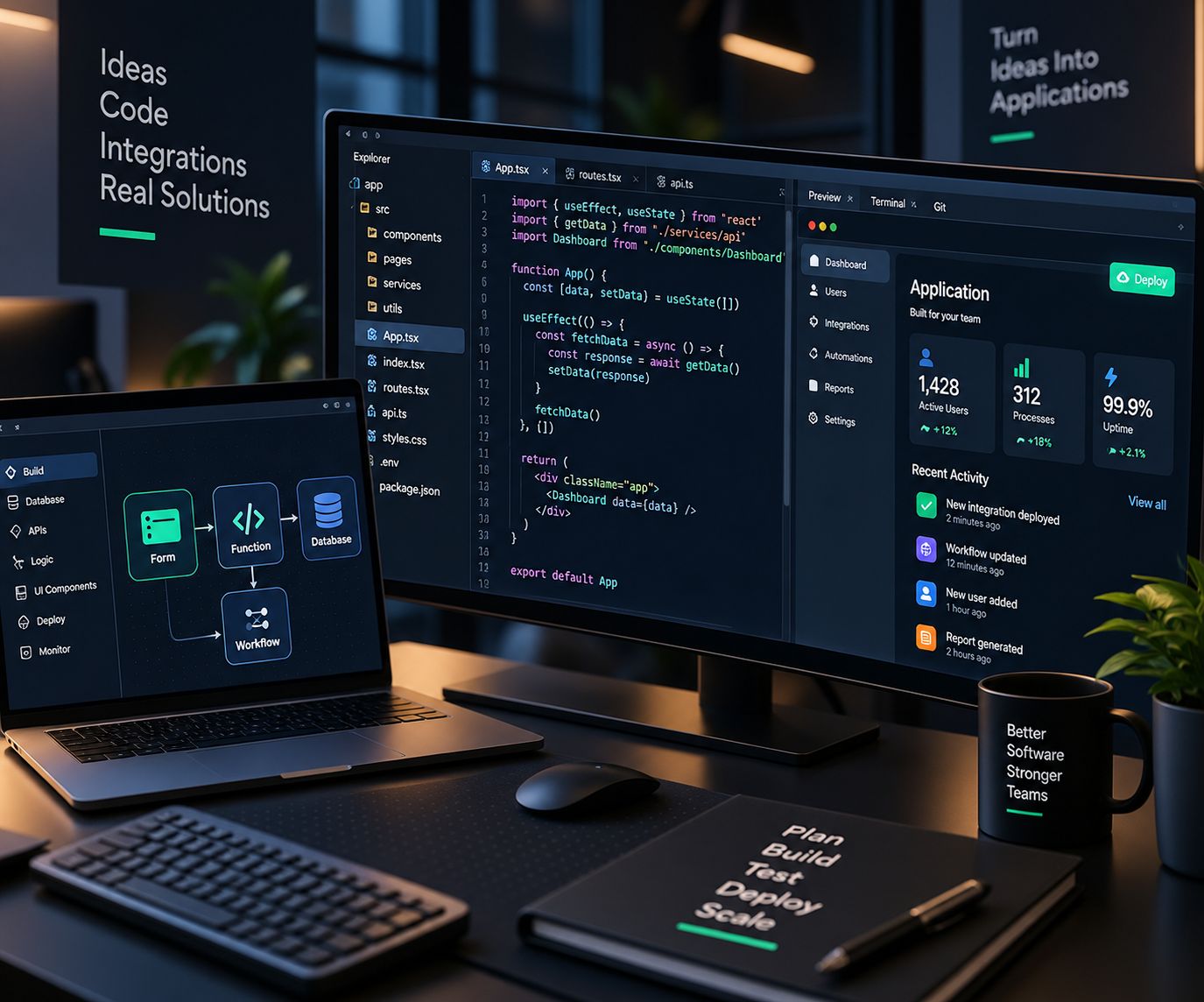
Spreadsheets replaced
Shared files and old databases rebuilt as an app with validation, history and your existing data moved across.
Most businesses run a critical process on a shared spreadsheet, an email chain or one person’s memory. It works until that person is out, the file breaks or the business grows. A custom application gives the process a real home, with the right fields, the right permissions and a history, so your people stop chasing data and start using it.
A shared spreadsheet with broken formulas and five versions of the truth.
One app with validated fields, permissions and a full audit trail.
Approvals live in email threads and nobody knows who signed off.
Every request follows an approval path, with reminders and a record of each decision.
Field teams write on paper and someone types it in later.
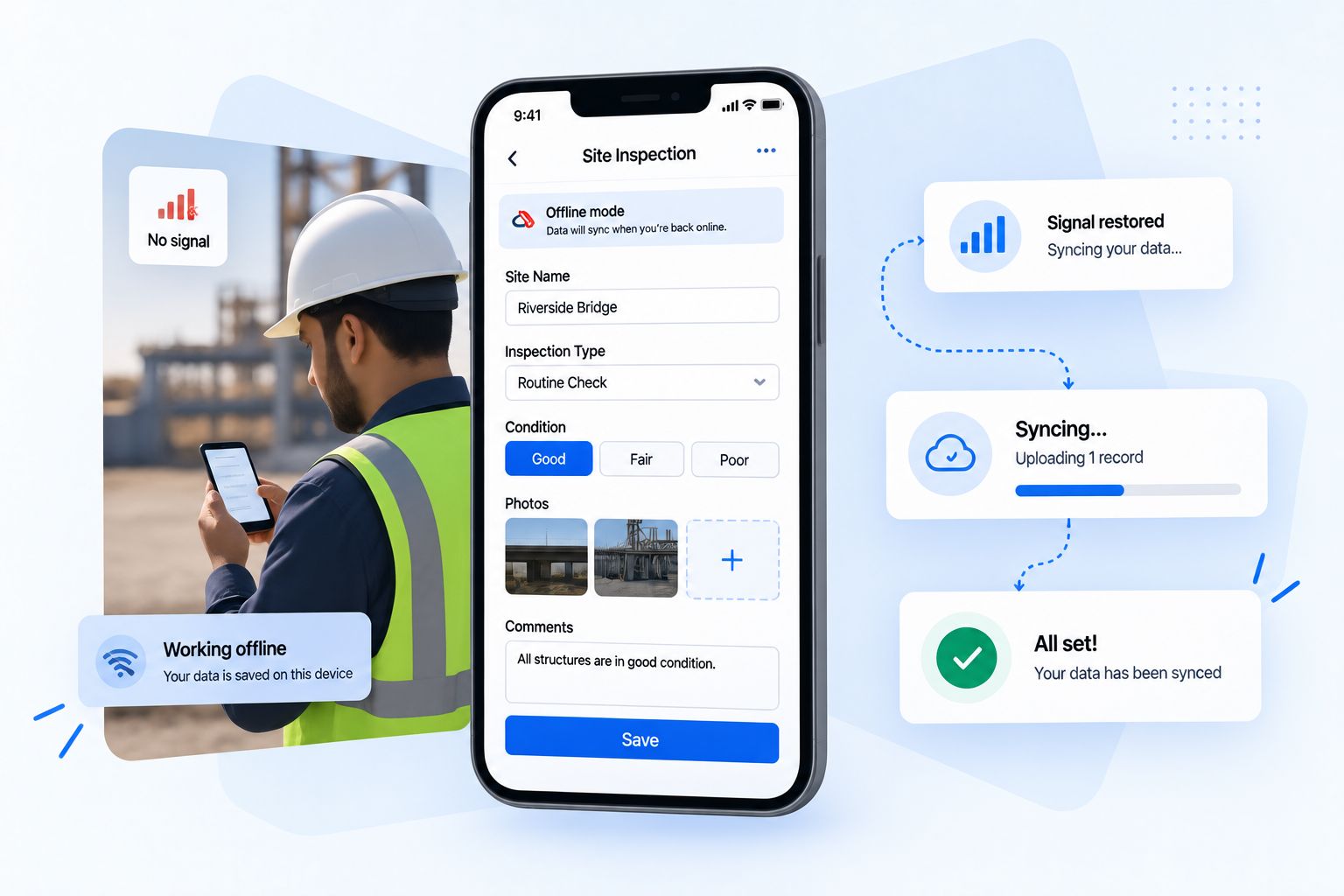
A mobile app captures photos, signatures and data on site, even offline.
Clients and vendors email files back and forth to get a status.
A secure portal lets them submit, upload and check status themselves.
Data is copied by hand between the CRM, the books and the tracker.
The app reads and writes the same records as the rest of your system.
Off-the-shelf software forces the team to work around it.
The app fits the process, and changes when the process changes.
Shared files and old databases rebuilt as an app with validation, history and your existing data moved across.
Secure, branded portals where clients, vendors and partners submit requests, upload files and track status.
Inspections, deliveries, photos and signatures captured on a phone, syncing when the signal returns.
Requests routed to the right approver, with rules, reminders, escalations and a record of every decision.
Connected to your CRM, books and other Zoho apps, and through APIs to the other systems you already run.
Documents read into records, predictions, anomaly flags and a chat that answers questions about your data.
Status, throughput and exceptions on one live screen, so nobody has to ask for an update.
Each person sees and edits only what their role allows, with every change logged.
The same builder serves very different businesses. Choose an industry to see the kind of apps we build for it.
An app is never finished. Each stage hands the next one something real, and the last stage feeds back into the first.
We map the process as it really runs, with the people who do the work.
A working prototype you can click through, changed until it is right.
Forms, workflows, roles, AI features and reports built out properly.
The app is linked to your CRM, books and other systems, and your data is loaded.
Users are trained by role, on web and mobile, and the old way is retired.
New modules and changes as the business moves. The app moves with it.
Custom apps fail when they are built from a requirements document nobody on the floor has read. We sit with the people doing the work, show them a working prototype early, and keep changing it until it fits. Then we hand it over with runbooks, so you own it.
to a working first version
trained on the real app
the app, the data and the runbooks
We map the process, the people, the data and the rules, and agree what version one has to do.
Data model, screens, roles and approval paths designed, with a clickable prototype instead of a slide deck.
Forms, workflows, mobile views, AI features and reports built, and your existing data cleaned and loaded.
CRM, books, other Zoho apps and outside systems integrated, tested end to end, then switched on.
Role-based sessions for users, supervisors and admins, recorded and handed over with written runbooks.
Your team maintains it, or we stay on for changes and new modules as the process evolves.
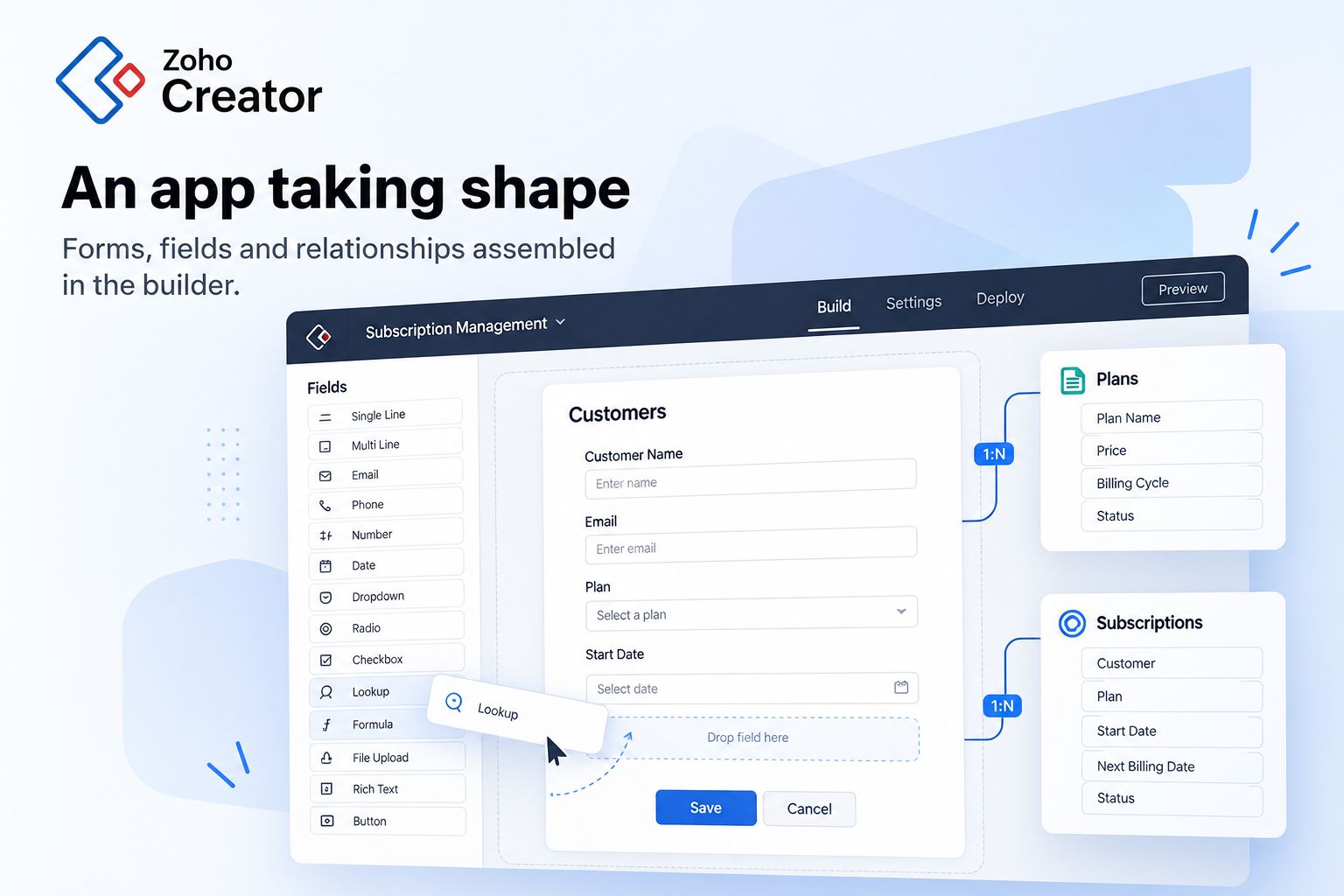
Zoho Creator is our core builder. It gives us forms, workflows, portals, mobile apps and reports in one platform, and it connects natively to Zoho CRM, Zoho Books, Zoho Analytics and the rest of Zoho One, with Zia built in. When a project needs it, we also build with other tools and APIs, so the app fits your stack rather than the other way round.


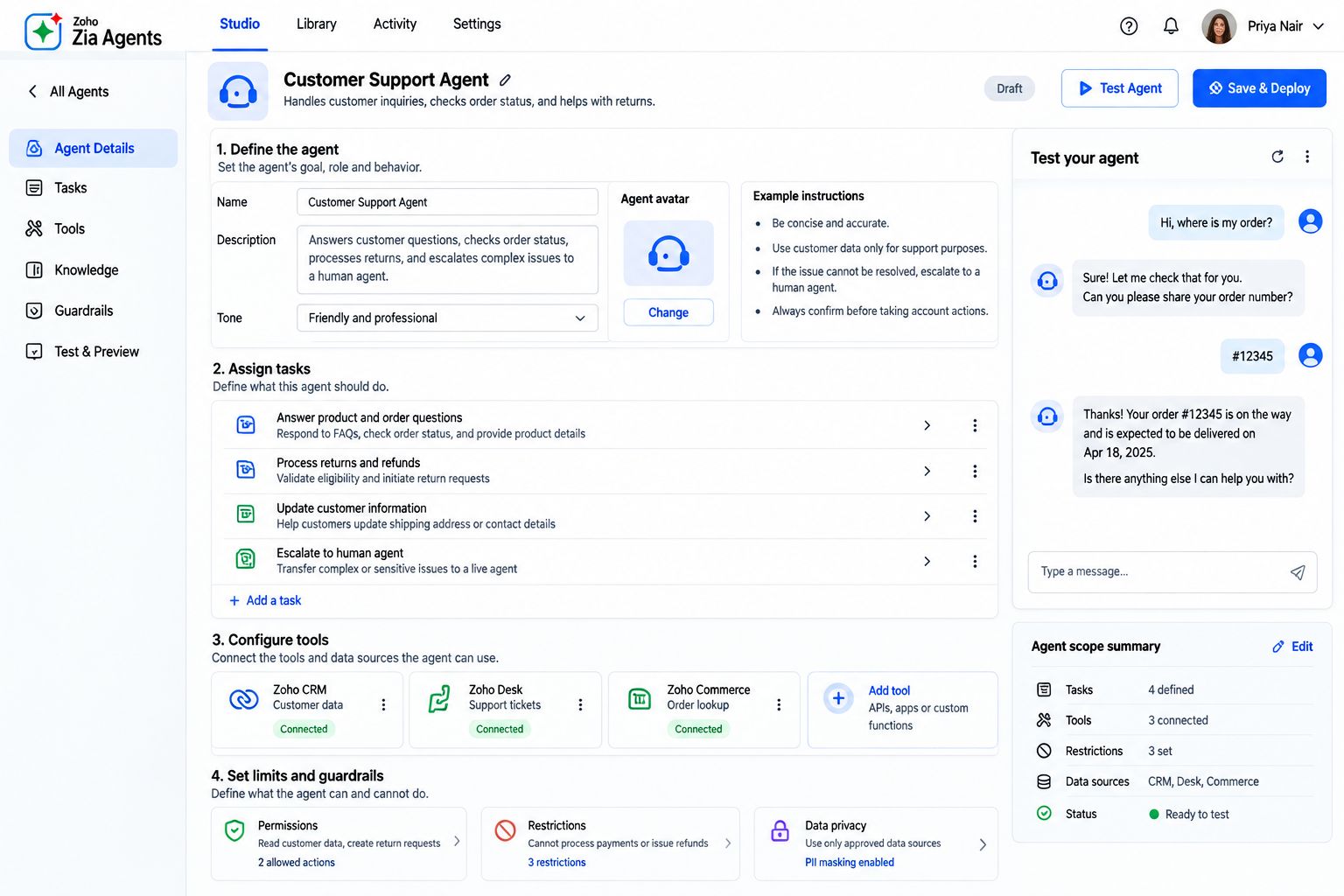
Zia and the AI models we connect help us draft an app faster, then keep working inside it every day: reading documents, answering questions, predicting and flagging what looks wrong. Your people design, approve and own the app and its rules. Every record AI creates and every change it suggests is reviewed by a person, and every AI action is logged.
Drafts forms, fields and app logic from a plain description of the process.
Decides how the process should work and signs off the design.
Reads invoices, forms and contracts into structured records.
Checks the extracted data and approves the record.
Answers questions about the app’s data in plain language.
Acts on the answer and asks the next question.
Predicts demand, delays and maintenance needs from history.
Plans the work and makes the call.
Flags anomalies, duplicates and entries that break the rules.
Investigates, fixes and updates the rule if needed.
Your custom apps, plus CRM, marketing, finance, HR, projects and analytics on one connected suite with one login and one set of data. We plan, implement and support it for you.
Buy software when it fits. Build when your process is what sets you apart, or when you are paying for a tool your team works around. A custom app fits the process you have, connects to the systems you already run, and changes when you change.
That is the most common reason people call us. Shared spreadsheets and old databases become a real application with validation, permissions, history and reporting, and the existing data comes across.
Zoho Creator is our core platform because it builds fast, runs on web and mobile, and connects natively to the rest of Zoho One. When a project needs it, we also build with other tools and APIs, and our Technology Assessment will say so.
You do. The app and the data live in your account. Your team can maintain it with the runbooks we hand over, or keep us on for changes and new modules.
We design roles, permissions, audit trails and data handling around the requirements you need to meet. We confirm those requirements with you in discovery, before anything is built.
AI helps us draft the app faster, then works inside it to read documents into records, answer questions, make predictions and flag anomalies. People review and approve what matters, and every AI action is logged.
A focused single-process app typically runs four to eight weeks, and you see a working prototype inside the first two weeks. Multi-department systems take longer, and you get a timeline after discovery.
Show us the spreadsheet, the email chain or the paper form. We will sketch version one of the app on the call.

Corporate Communications. Emotional Storytelling. AI. Operating Systems.