Answering customers
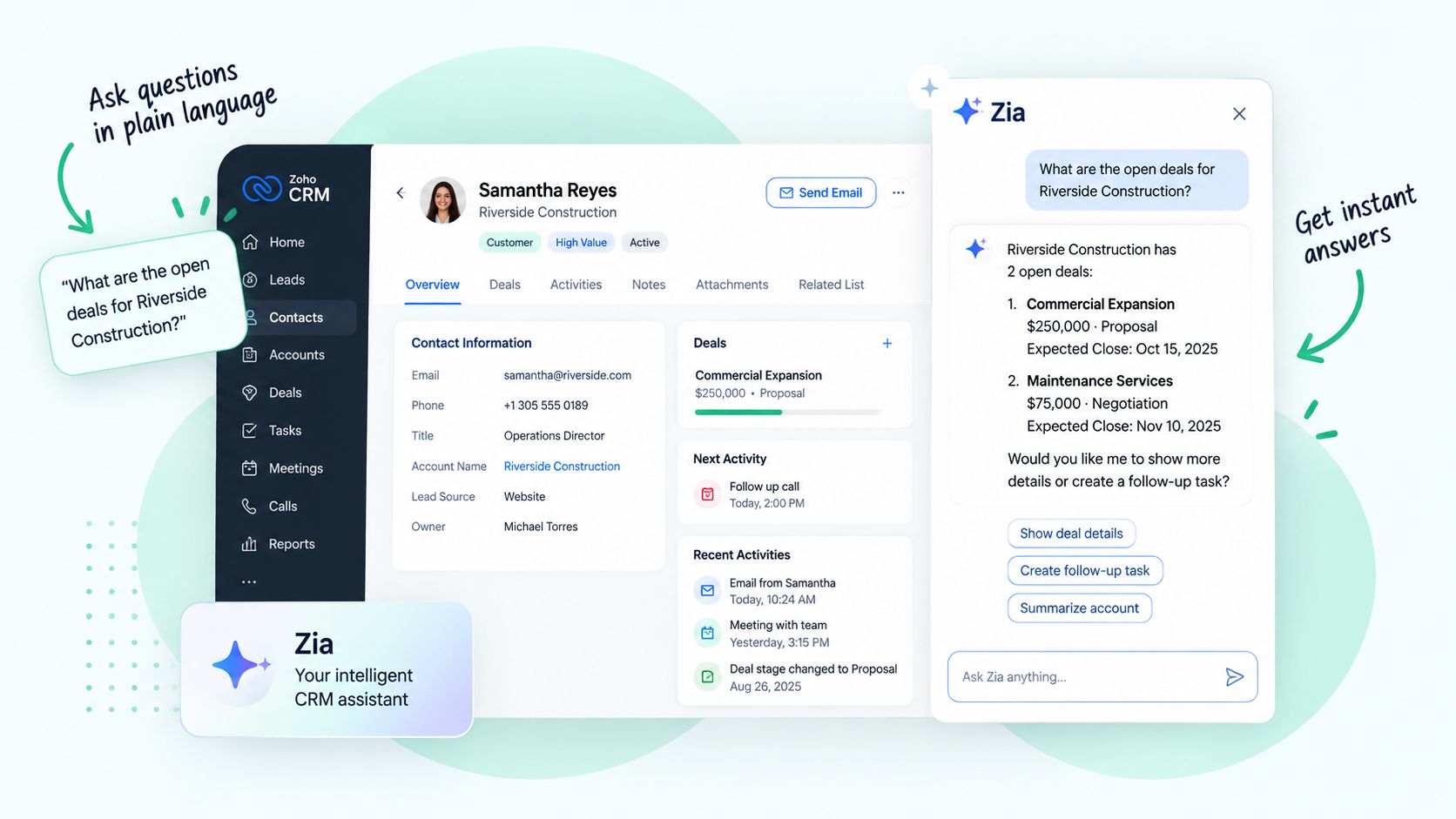
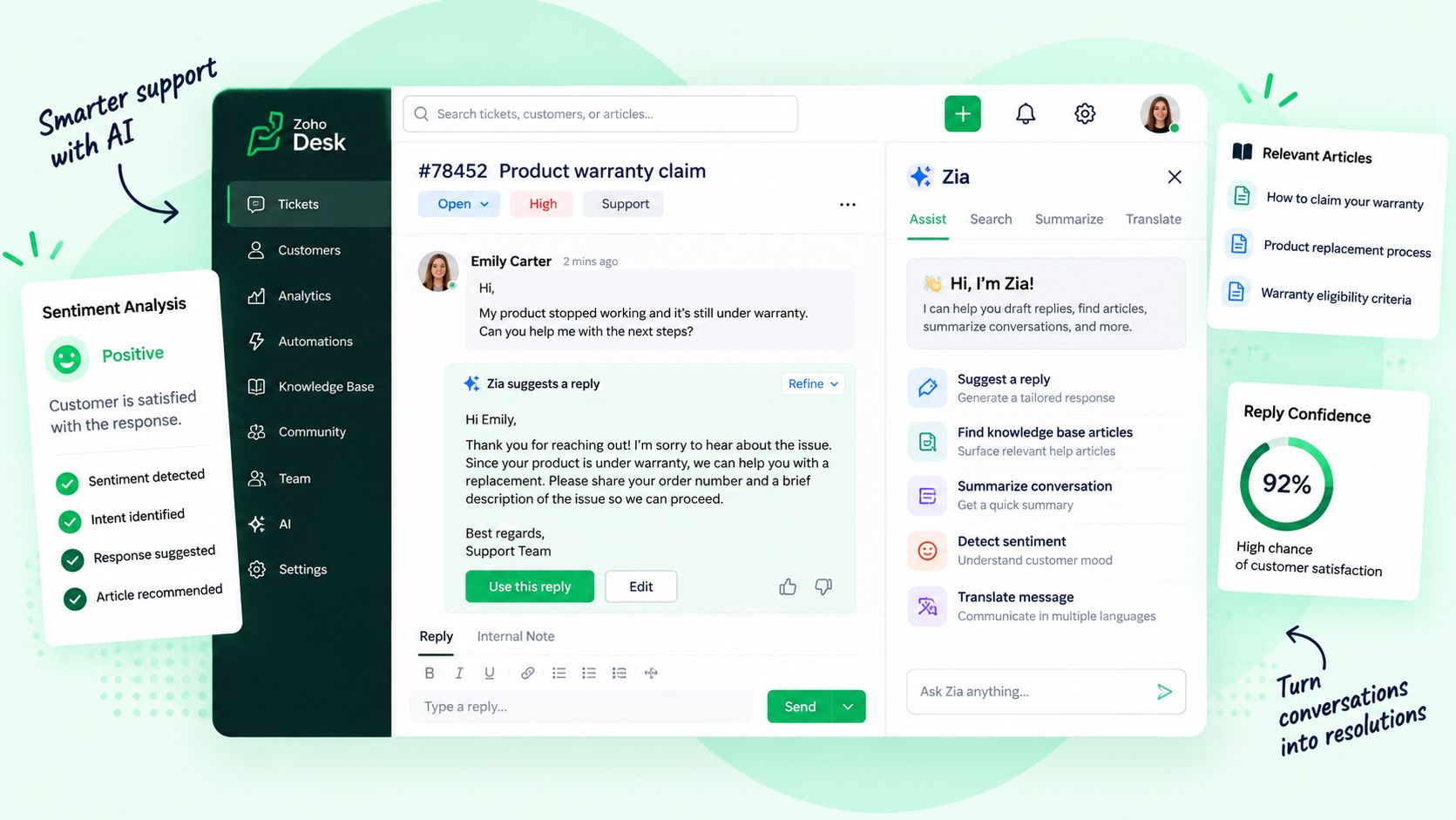
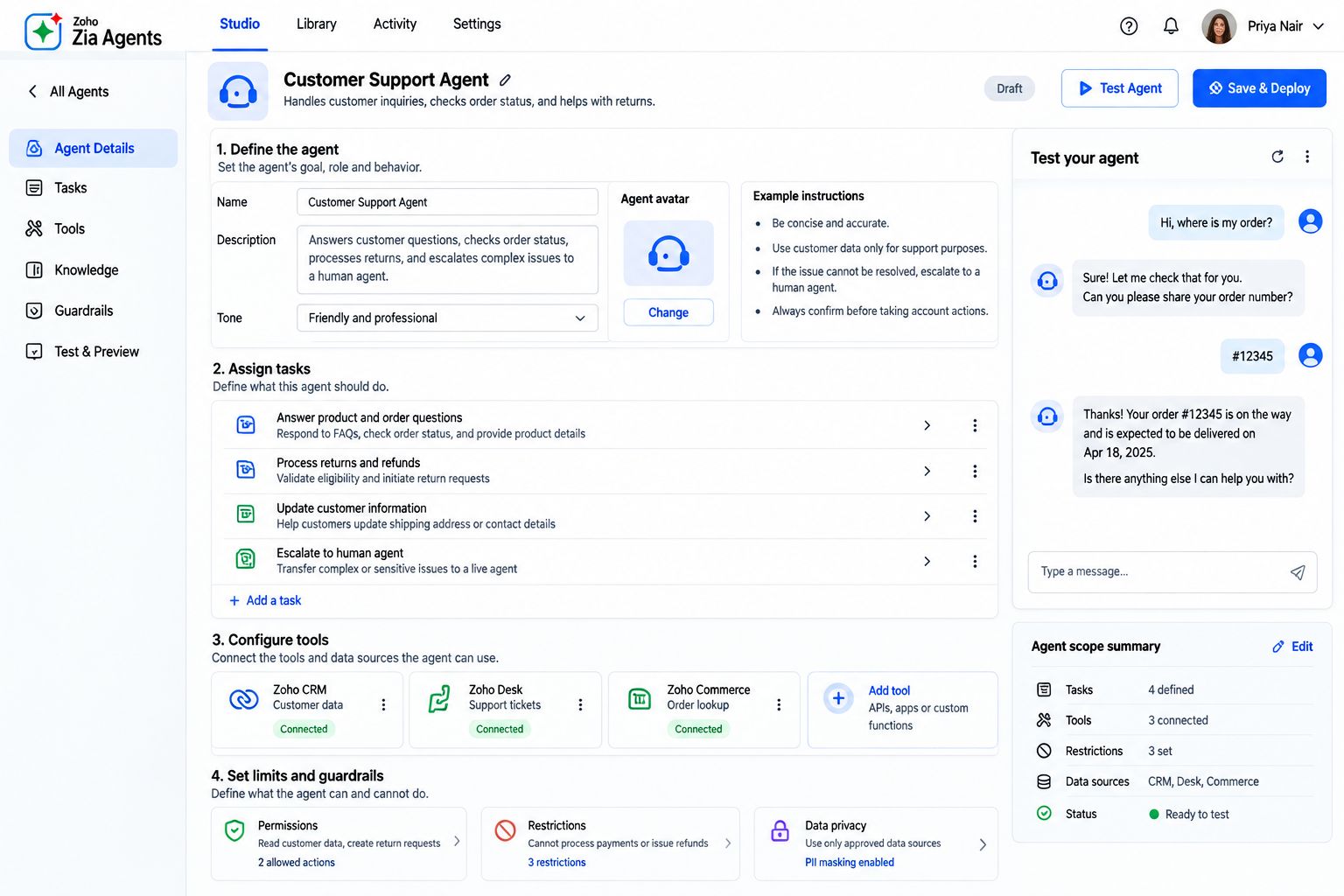
Chatbots and assistants answer common questions from your own content, day and night, and hand off to a person.
Most companies already use AI, just not on purpose. Staff paste data into public tools, pilots never leave the demo, and nobody can say what the AI did or why. AI done right is planned, built into the systems your team already works in, limited to the data it should see, and watched by a person who owns the result.
AI tools are bought one at a time and nobody knows who uses what.
One AI plan, tied to your systems and the goals you already have.
Staff paste customer data into public chat tools.
AI runs inside your own systems, on approved data, with clear permissions.
Pilots look good in a demo and never reach daily work.
Every use case goes live where your team works, with a named owner.
Nobody can explain why the AI did what it did.
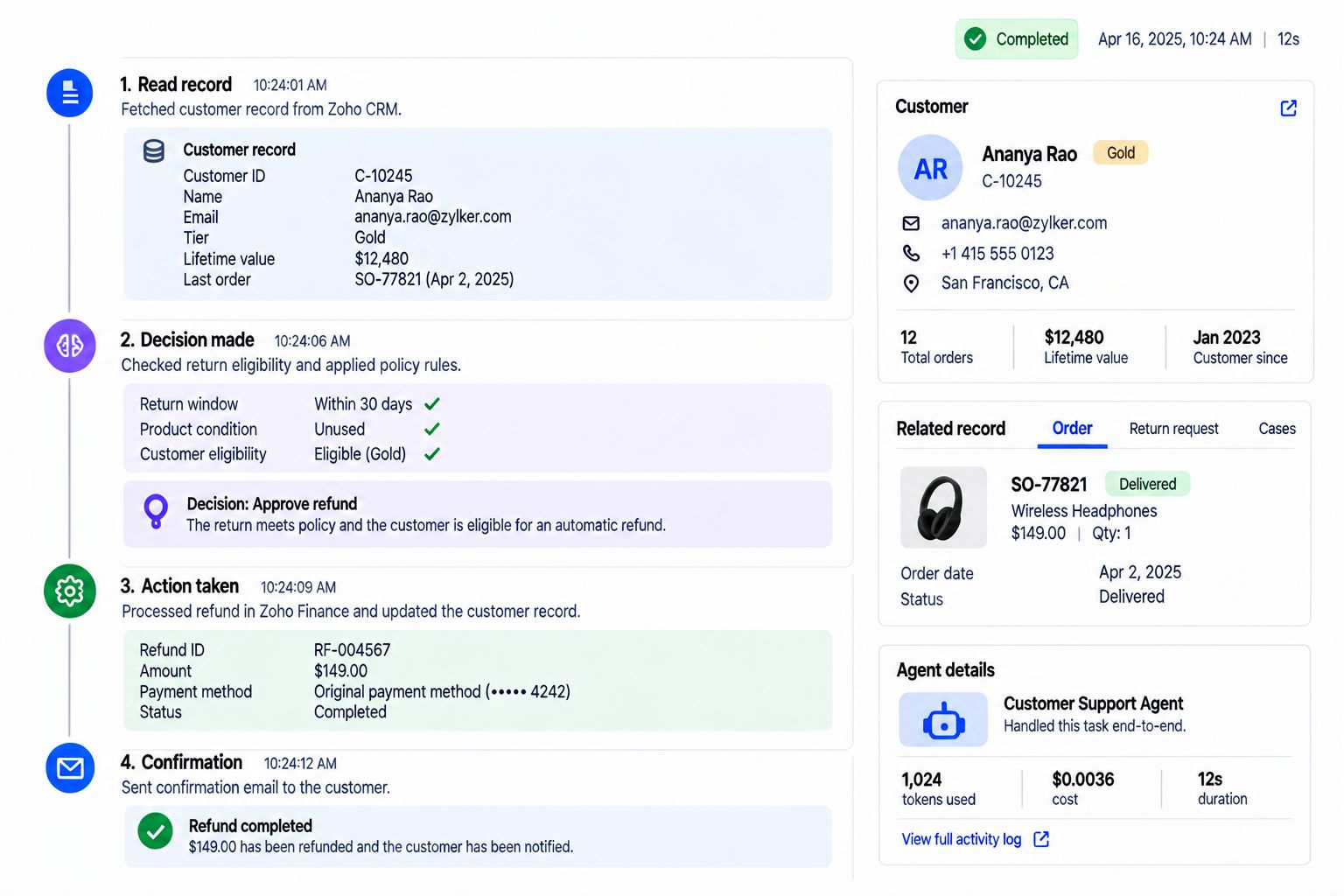
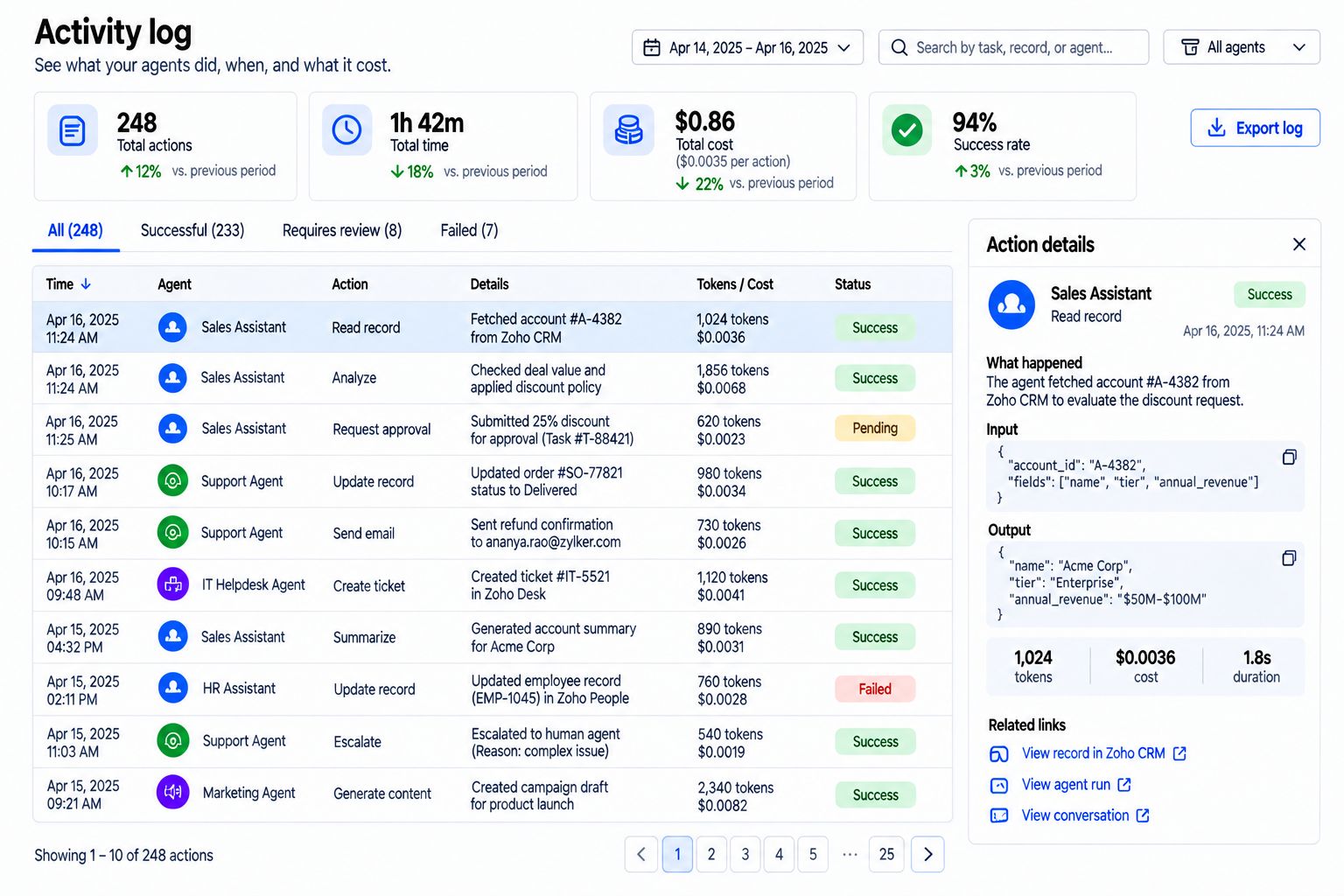
Every AI action is logged: what it read, what it decided and what it cost.
Answers slowly go out of date as the business changes.
Quality is monitored, and the AI is retrained when results slip.
People worry AI is there to replace them.
People are trained to direct the AI and approve what matters.
Chatbots and assistants answer common questions from your own content, day and night, and hand off to a person.
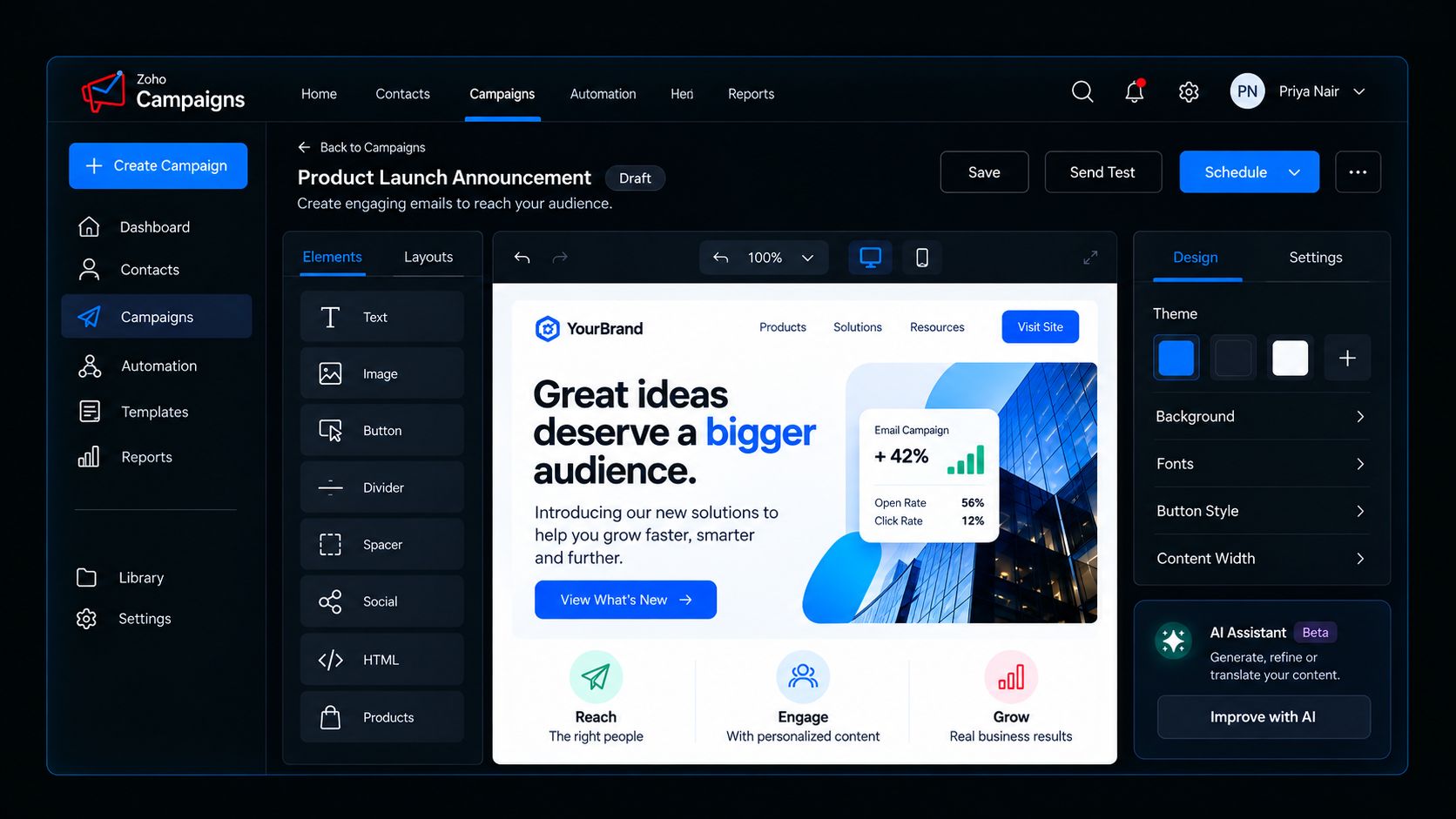
Emails, replies, proposals and meeting notes drafted in seconds for a person to edit and send.
Invoices, forms, contracts and receipts read and turned into clean records your team can check.
Leads, tickets and requests classified, tagged and sent to the right person the moment they arrive.
Deals likely to close, customers likely to leave and invoices likely to be late, forecast from your history.
Ask a question in plain language and get the answer, the chart and the reason the number moved.
AI agents complete multi-step tasks across your apps, inside the permissions and limits you set.
AI spots missing answers and drafts updates to articles, policies and FAQs for a person to approve.
AI looks different in every team, but the rules are the same. Choose a team to see what it gets.
Every AI solution we deliver follows the same path, from the first question to the day your team owns it. No step is skipped, even for a small chatbot.
We start with the business problem, not the technology: the job to be done, who owns it, what good looks like and how we will measure it.
We find the data the AI needs, clean and connect it, and agree what it may and may not read. Privacy and access rules are set here.
We test what is feasible, then pick the simplest fit: a built-in Zia feature, a ready-made agent, a leading AI model or a custom build.
We write the instructions, rules and examples, then test against your real records in a sandbox and adjust until the results hold up.
The AI goes live inside the apps your team already uses, with narrow permissions and spend limits. Changes are versioned and released like any other software.
We watch accuracy, cost and feedback. As your business changes, results can drift, so we catch it early and retrain or adjust before it shows.
Each assistant and agent gets a written record: its job, its data, its permissions, where a person signs off and who owns it.
Governance rules agreed, your team trained and an owner named on your side. We pass the baton and stay on to support it.
AI only works when people trust it. Every engagement sets out who owns what, where a person signs off, how your data is protected and how your team learns to work alongside it.
to a first AI use case live
reviewed and logged
quality and cost reviews
We map where your team’s time goes, rank AI opportunities by value and risk, and agree the first three wins.
Every use case gets a business owner on your side and a lead on ours, with decision rights written down.
Permissions, spend limits, approval points and what the AI must never do, agreed before anything is built.
AI reads only approved sources, access follows each person’s role, and sensitive fields stay out of what the AI sees.
People learn to direct, review and correct the AI on their own work, with playbooks for when to step in.
Monthly reviews of the activity log, quality, cost and feedback, and a decision on the next use cases.
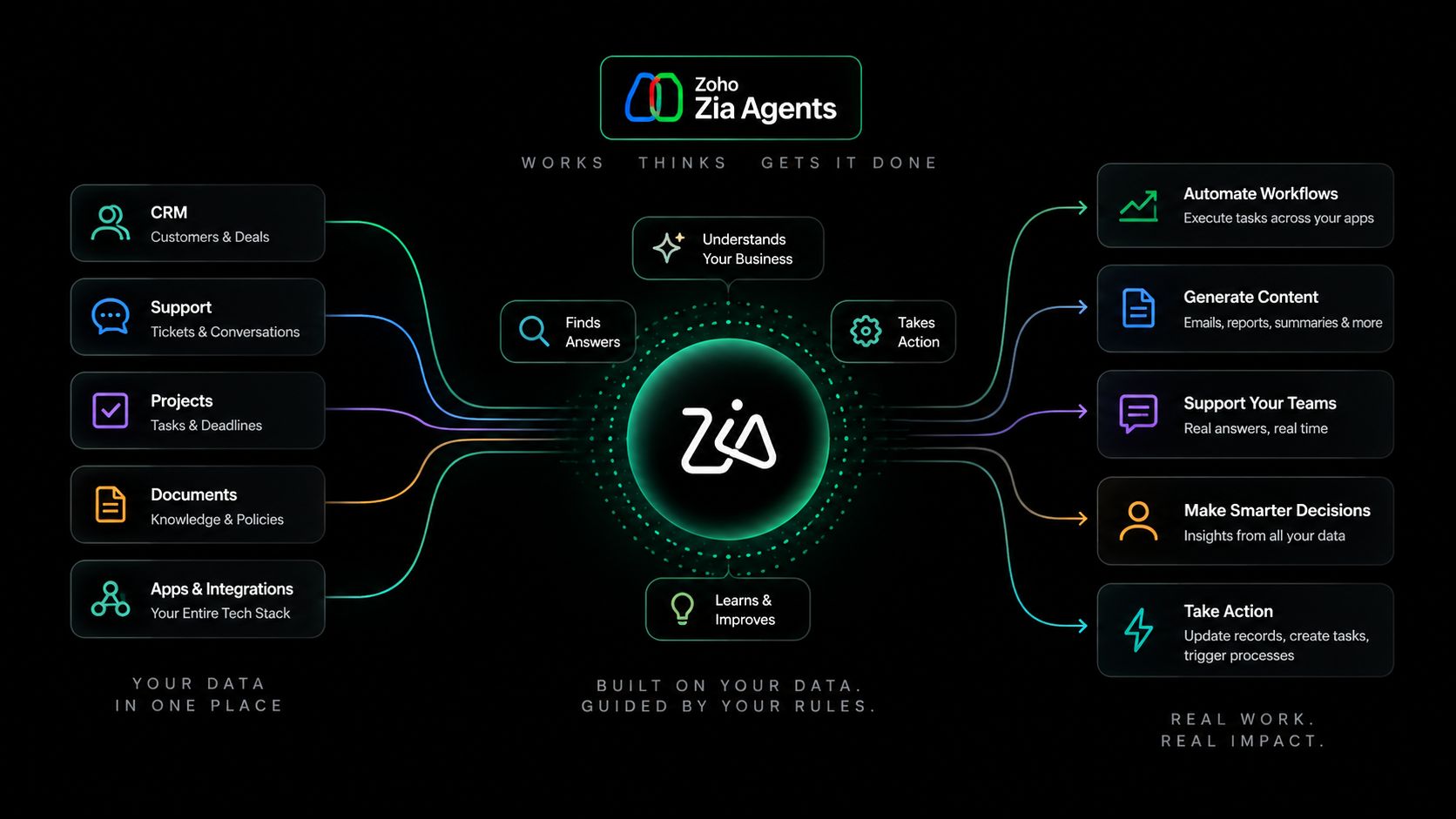
Zia is the AI built into Zoho, so assistants and agents work on your own records in Zoho CRM, Zoho Desk, Zoho SalesIQ, Zoho Creator and Zoho Analytics, under the permissions you already have. When a job needs more, we also work with leading AI models and platforms such as OpenAI, Anthropic Claude and Google Gemini, connected under the same rules for review and logging.






Every AI solution we build has a line it does not cross. AI reads, sorts, drafts and suggests inside the limits you set, and anything that touches a customer, money or policy waits for a person. Every reply, decision and change is reviewed by a person, and every AI action is logged.
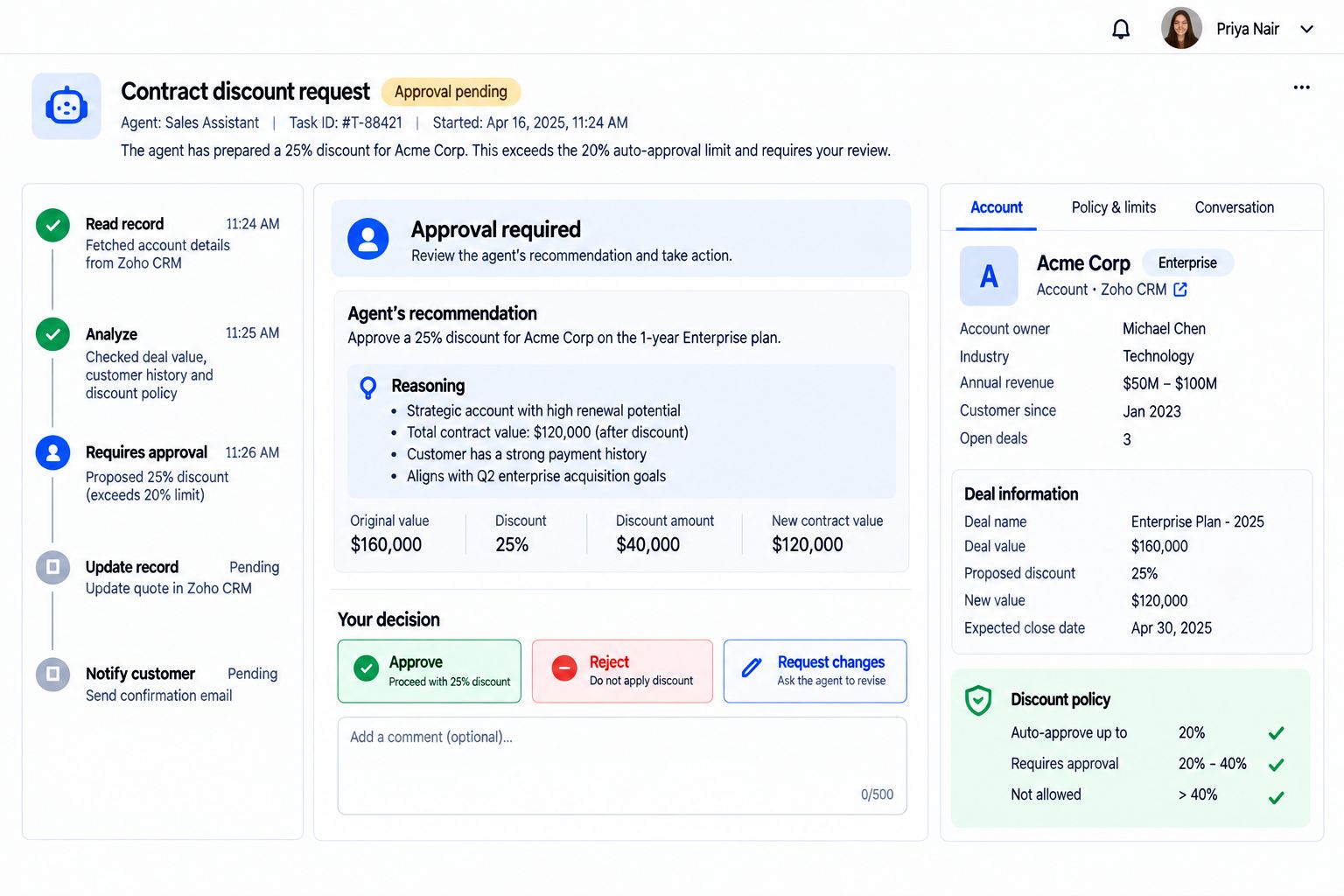
Reads the records and drafts a recommendation.
Approves it, rejects it or asks for changes.
Acts only within the permissions and spend limits it is given.
Sets the limits and changes them when the business changes.
Answers routine questions from approved content.
Handles anything sensitive, unusual or upset.
Flags exceptions, risks and unusual patterns.
Decides what to do about them.
Logs every action, what it read and what it cost.
Reviews the log and owns the outcome.
AI is only as good as the data it can see. Zoho One puts sales, service, marketing, finance, HR, projects and analytics on one connected suite with one login and one set of data, so your AI sees the whole picture. We plan, implement and support it for you.
Your data stays in your systems, and the AI reads only the sources we approve together, with access that follows each person’s role. Before anything is connected, we review each provider’s data terms with you and choose settings that keep your business data out of shared model training wherever the provider allows it.
Zia comes first, because it is built into Zoho and already works on your records. We also work with leading AI models and platforms such as OpenAI, Anthropic Claude and Google Gemini when a job needs them. The right choice depends on the task, the data and the cost, and our Technology Assessment will say which fits.
No, but data quality shapes the results. We start with a use case that needs only a small, well-understood slice of your data, clean and connect that slice, and improve the rest as we go.
Our approach is human-led and AI-assisted. AI takes the repetitive work, and people keep the decisions, the approvals and the relationships. We train your team to direct and review the AI, so their time goes to the work that needs a person.
Most companies start with AI features already in their Zoho apps and ready-made agents, which cost the least. We build custom only when nothing off the shelf fits. You get a proposal after the review, and once live we report hours saved against cost.
Every AI action is logged, so we can see what it did and why. We review accuracy, cost and feedback with you each month, and when results start to slip we retrain or adjust it before your customers notice.
A first use case, such as a website chatbot or a drafting assistant, can be live in a few weeks. Custom agents, integrations and data work take longer, and you get a timeline after the review.
Show us where your team loses time today. We will show you where AI fits, what it would take and how it would be governed.

Corporate Communications. Emotional Storytelling. AI. Operating Systems.