Unified data from every system
CRM, accounting, ecommerce, ad platforms, databases and spreadsheets blended into one model.
When data lives in the CRM, the books, the online store, the ad accounts and a dozen spreadsheets, every answer takes days and nobody trusts the total. Analytics done right joins it all into one model, looks forward as well as back, and lets the people making the call ask their own questions.
Data sits in separate systems and spreadsheets that never agree.
Every system feeds one model, refreshed on a schedule.
Forecasts are a gut feeling typed into a spreadsheet.
Forecasts are built from your history and updated as new data arrives.
Nobody knows which channel actually brought in the revenue.
Attribution connects spend and campaigns to closed revenue.
Problems show up in the month-end report, weeks too late.
Data alerts flag unusual movement the day it happens.
Big decisions are argued from opinions.
What-if scenarios show the likely impact before you commit.
Every question waits for the one person who knows the data.
Anyone can ask in plain language and get the answer with the chart.
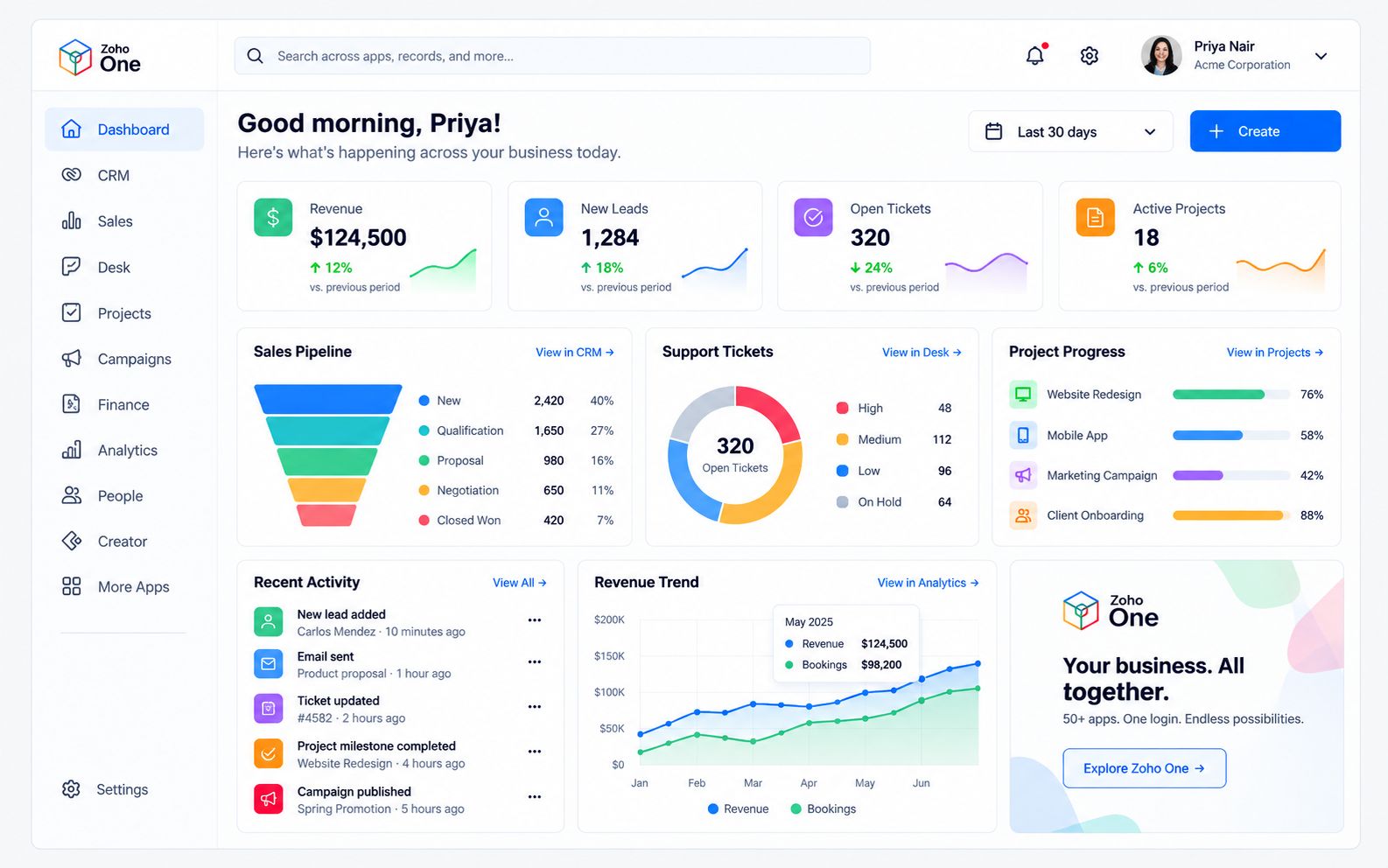
CRM, accounting, ecommerce, ad platforms, databases and spreadsheets blended into one model.
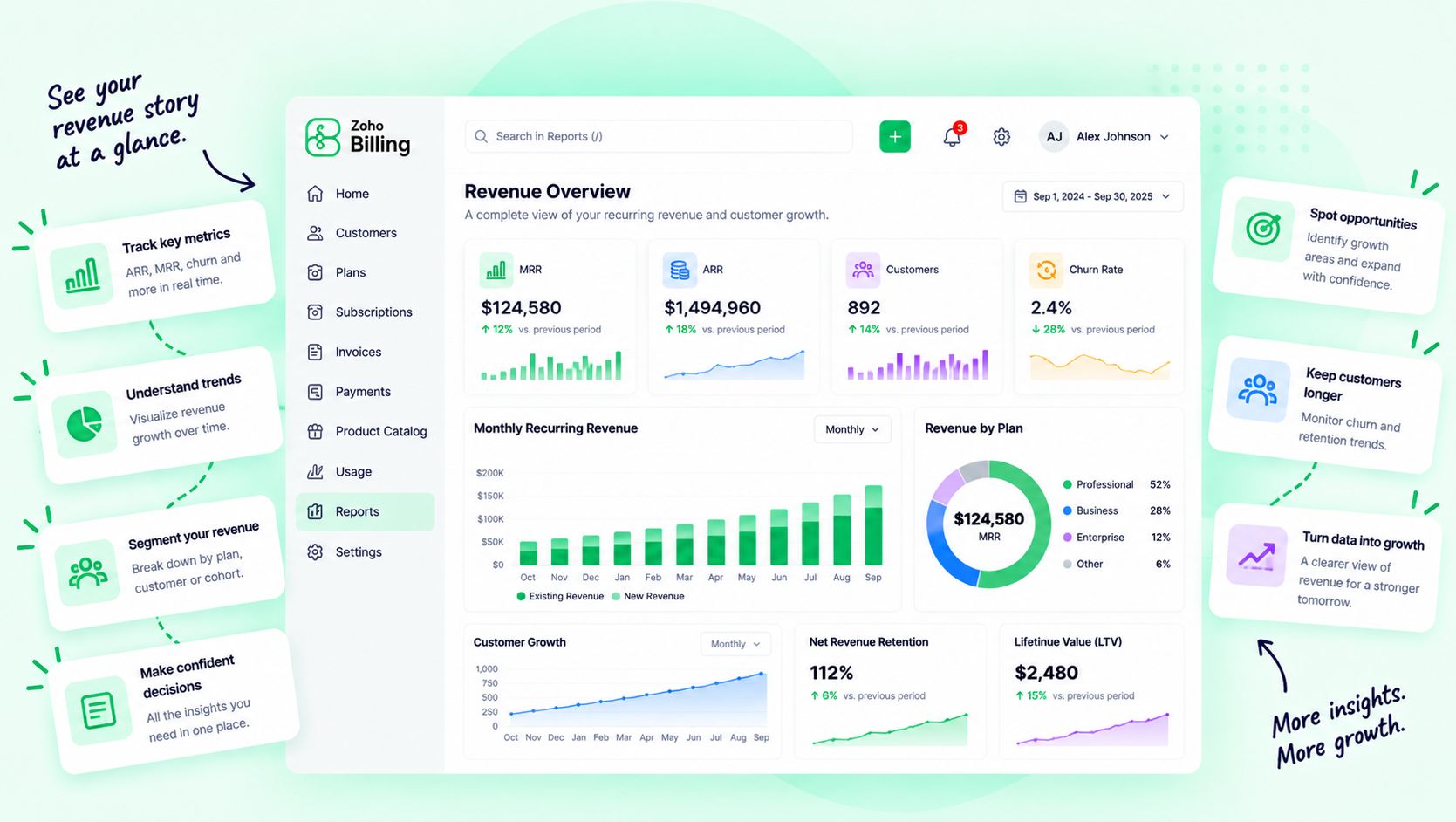
Revenue, demand, pipeline and cash projected from your own history.
Customers grouped by when and how they joined, to see retention, repeat purchase and lifetime value.
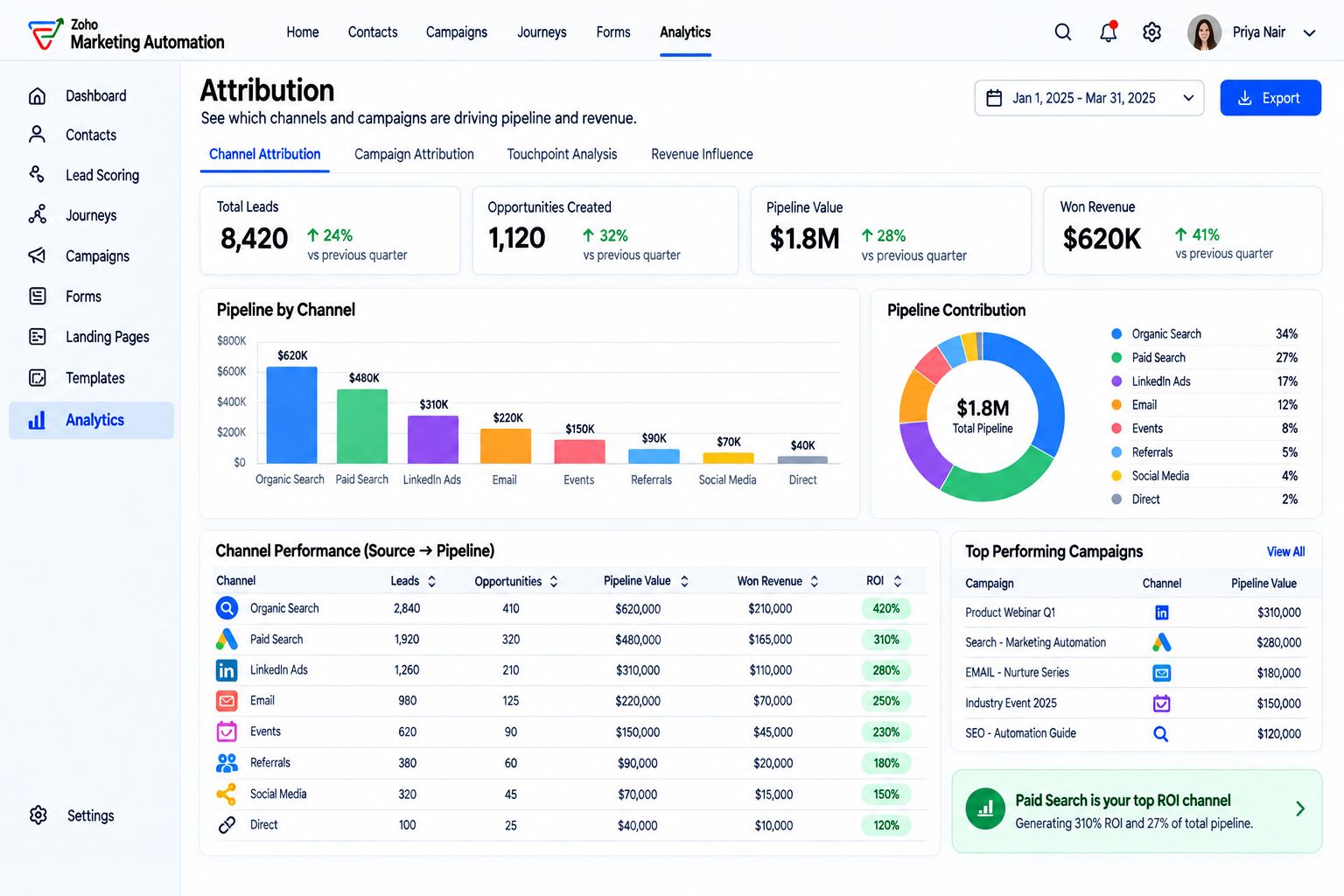
Every channel, campaign and touchpoint traced to the pipeline and revenue it created.
Unusual swings in sales, costs, orders or service flagged with data alerts as they happen.
Change price, headcount, spend or volume and see the likely effect before you commit.
Reports and dashboards built on any system you choose, Zoho or not, and embedded where people work.
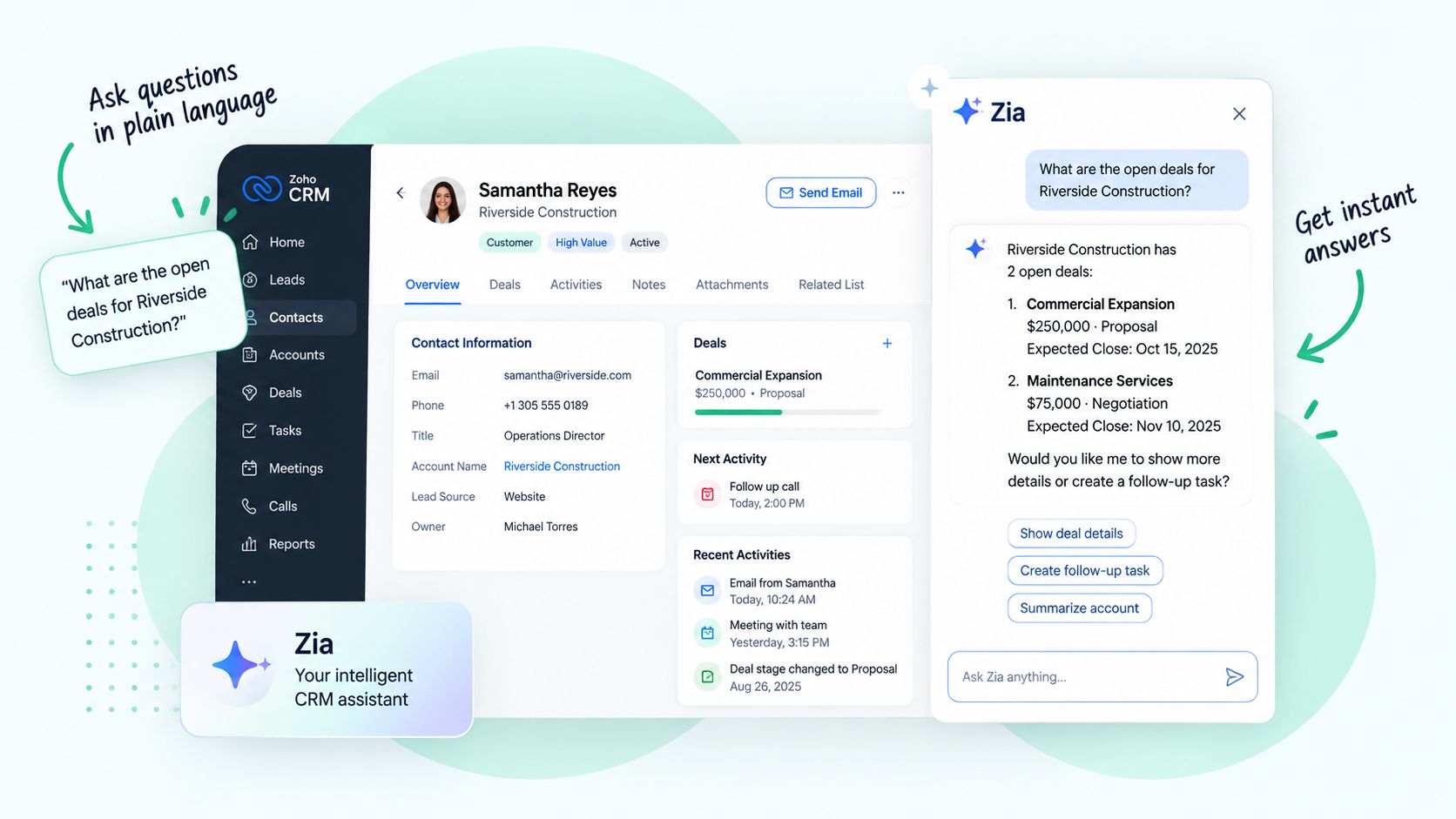
Ask Zia a question in plain words and get the answer, the chart and the reason.
The same analytics serve each team differently. Choose a team to see what it gets.
Analytics is not a report you build once. It is a loop that turns what happened into what you do next, and then measures whether it worked.
Data flows in from the CRM, books, store, ad accounts, databases and spreadsheets.
Sources are cleaned, blended and given one shared set of definitions.
Cohorts, attribution and trends explain why the numbers moved.
Forecasts and scenarios show where things are heading and what could change it.
Dashboards, scheduled reports and alerts reach each person where they work.
People decide, the plan changes, and the next cycle measures the result.
Most analytics projects fail because the numbers do not match and nobody knows why. We start from the decisions you need to make, agree the definitions with your team, check every figure against your source systems, and keep refining after launch.
to a first unified model
trained on its own data
forecast and model reviews
We list the decisions you need to make, the systems your data lives in and the questions nobody can answer today.
The data model, metric definitions, access rules and the analyses each team needs.
Zoho and non-Zoho sources connected, cleaned, blended and checked against the source totals.
Forecasts, cohorts, attribution, scenarios, dashboards, scheduled reports and alerts go live.
Every team learns to read its views, ask its own questions and trust the answers.
Monthly reviews of forecast accuracy, data quality and adoption, and the next round of analyses.
Zoho Analytics is the business intelligence layer. It connects natively to Zoho CRM, Zoho Books and the rest of Zoho, and to other systems through its connectors, so sales, finance, store and marketing data land in one model. Zia, its AI assistant, answers questions in plain language and shows the chart behind the answer.




Zia and our AI agents work inside your analytics every day. They watch the metrics, answer questions, build forecasts and draft the summary, so your people spend their time deciding instead of digging. Every forecast, alert and change to the data model is reviewed by a person, and every AI action is logged.
Watches every metric for unusual movement.
Decides which alerts are worth acting on.
Answers questions in plain language, with the chart.
Checks the answer against what they know about the business.
Builds forecasts from history and live data.
Sets the targets and adjusts for what the data cannot see.
Drafts a summary of what changed and why.
Edits the story and presents it to the board.
Suggests data cleanup and new connections.
Approves every change to the data model.

Your analytics, CRM and books, plus marketing, support, HR and projects on one connected suite with one login and one set of data. We plan, implement and support it for you.
Dashboards & Analytics gives every team a clear view of its everyday KPIs. Advanced Analytics goes deeper: it unifies data from every system and adds forecasts, cohorts, attribution, anomaly detection and scenarios. Performance Monitoring tracks goals and results person by person. Many clients start with dashboards and add advanced analytics as their questions grow.
Yes. Zoho Analytics has connectors for popular business apps and databases, and can import spreadsheets and files. We also work with accounting, ecommerce and advertising platforms outside Zoho and bring them into the same model on a refresh schedule.
No. For most companies Zoho Analytics holds the blended data itself, so there is nothing extra to build. If you already run a database or warehouse, we connect to it instead of duplicating it.
A forecast is only as good as the history behind it. We build forecasts from your own data, show the range of likely outcomes, and compare them with actual results every month so they improve over time. A forecast guides a decision. It is never a guarantee.
Access is set by role, team and, where needed, by row, so each person sees only the data they should. We design the permissions with you, document them, and review them when your team changes.
AI watches for anomalies, answers questions in plain language, helps build forecasts and drafts summaries of what changed. People review and approve what matters, and every AI action is logged.
A first unified model with your core sources and a few key analyses can be ready in a few weeks. More sources, predictive models, embedded analytics and data cleanup take longer, and you get a timeline after the review.
Show us the systems you run and the decisions you need to make. We will show you what one unified, forward-looking view would change.

Corporate Communications. Emotional Storytelling. AI. Operating Systems.